
85% of organizations use AI agents today. Discover what they do, the ROI they deliver, and why waiting could cost your business.

eCommerce
What makes a digital storefront feel like a flagship store? We break down the retail eCommerce software providers and tools that power the top luxury shopping platforms today.

In the high fashion industry, the white glove service used to mean a physical person in a tailored suit welcoming you into a flagship store on Bond Street or 5th Avenue. Today, that experience has migrated to our screens. Creating that same feeling of exclusivity and seamlessness online requires a powerhouse of code and interconnected systems working behind the scenes. If you have ever wondered why browsing top luxury shopping platforms feels so much smoother than your average local retailer, the answer lies in their tech stack. Our brand lives and breathes these architectures. Let’s pull back the curtain on the luxury retail technology stack of this year and see what is actually powering the world’s most elite digital storefronts.
For years, big brands used monolithic systems. These were huge, all-in-one software packages that did everything from hosting the website to managing the warehouse. The problem was that they were slow, rigid, and very hard to update. If you wanted to change how the checkout looked, you might accidentally break the inventory system.
Today’s winners have moved to Composable Commerce. Think of it like building with Legos. Instead of one giant block, brands pick the best individual bricks for each function. This modular approach is the backbone of the modern luxury retail technology stack. It allows brands to swap out one part of the system without breaking the rest, which makes them incredibly agile. They can test new features in days rather than months.
Luxury is all about the front. In tech terms, this is called Headless Commerce. By decoupling the front end (what you see) from the back end (the logic and data), designers have total creative freedom. Platforms like SSENSE or Net-A-Porter do not want to be restricted by a standard template. Headless technology allows them to create immersive, magazine-style layouts that load instantly on a smartphone in Tokyo or a desktop in New York. The back end stays the same, but the head can be anything from a mobile app to a smart mirror in a physical boutique. This separation ensures that the website never feels clunky or restricted by the limitations of a traditional database.
We have moved past the era of basic chatbots that just annoy customers. In 2026, the top luxury shopping platforms are integrating Agentic Commerce. Instead of you searching for a black silk dress, an AI agent acts as a digital personal shopper. It knows your style, your previous purchases, and even your upcoming calendar events. It does not just suggest a dress. It suggests a dress that matches your existing shoes and ensures it can be delivered to your hotel in Paris by Friday. These agents operate autonomously to solve problems for the customer, such as tracking a delayed shipment or suggesting an alternative size based on real-time reviews, all without the customer needing to lift a finger.
Building these complex systems requires reliable partners. While many luxury brands used to build everything from scratch, they now lean on specialized retail eCommerce software providers to handle the heavy lifting of the core infrastructure.
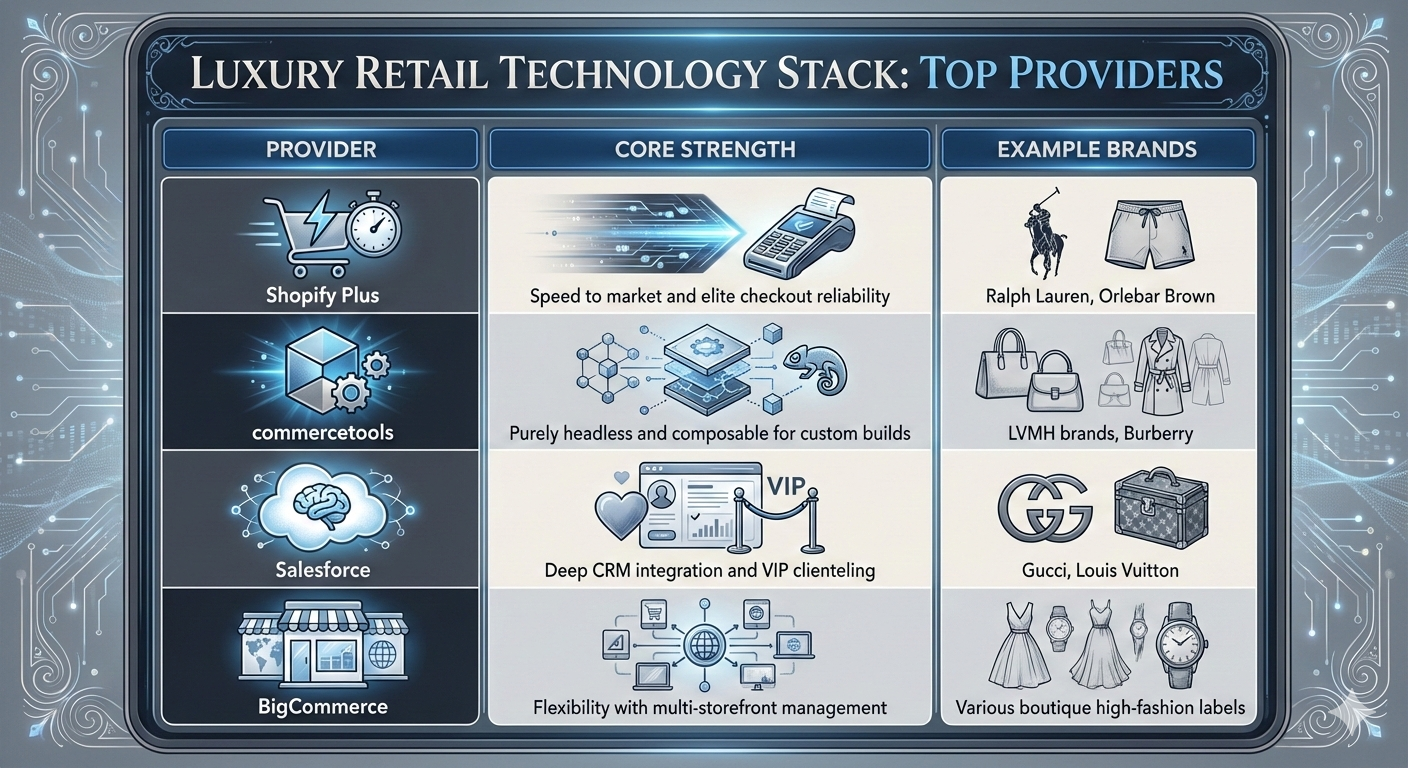
By leveraging these retail eCommerce software providers, brands can focus on the vibe and the customer experience rather than worrying if the checkout button will work during a high-traffic product drop. It allows the internal tech teams to focus on innovation rather than basic maintenance.
The modern luxury shopper does not see a difference between the physical store and the app. This is where Unified Commerce comes in. The tech stack now includes several key layers to make this work.
First, there is RFID Tracking. This provides real-time inventory so an associate in-store knows exactly what is available in the warehouse across the world. Second, there are Smart Fitting Rooms. These are mirrors that recognize the items you have brought in and suggest matching accessories via a touchscreen. Finally, there is the concept of the Endless Aisle. If a store is out of your size, the associate can order it from another location right there on a tablet, and the transaction flows through the same system as the website.
In luxury, fake is the ultimate bad word. To combat this, the tech stack has expanded to include blockchain-based Digital Product Passports. When you buy a high-end watch or handbag today, it often comes with a digital twin. This record lives on a blockchain and proves several things. It proves the item is authentic. It shows the exact origin of the materials, which is vital for sustainability. It also tracks the ownership history, which is essential for the booming luxury resale market.
Luxury is personal, or it is nothing. To achieve this at scale, brands use a Customer Data Platform or CDP. A CDP pulls data from everywhere. It tracks your clicks on the app, your purchases in the Paris boutique, and even your interactions with their social media ads. This allows the brand to treat a Very Important Client like royalty. It ensures they see a completely different version of the homepage than a first-time browser. This level of personalization is only possible when the data is clean, unified, and accessible across the entire technology stack.
You might not be running a billion-dollar fashion house yet, but the trends seen in the leading platforms eventually trickle down to all of eCommerce. Whether it is the move toward headless architecture or the integration of AI agents, staying ahead of the curve is what separates the leaders from the followers. At Resolve Digital, we believe that luxury-grade tech should not be reserved for the elite. By using a composable approach, even mid-sized brands can build a tech stack that is just as fast, secure, and personalized as the giants. The goal is to remove friction and create a digital experience that feels as intentional as a hand-stitched leather bag. If you are interested in moving forward with us, contact us and book your free strategy call now!
The right partnership can help you elevate your online presence and grow your business by attracting your dream customers. Whether you're looking to develop a luxury eCommerce store from scratch, improve your existing site, or migrate to a different platform, Resolve Digital can help you succeed. Get in touch to learn more about our end-to-end eCommerce services!